
Compost & Incarceration
a seedling thought experiment

I’ve said it before and I’ll say it again: waste is a human invention.
Everything in the natural world dies or changes. We humans are the ones responsible for unyielding plastic, for eternal styrofoam, for frozen smiles. We invented excess and therefore waste.
But we can let the earth shape our thinking. We can let the principles of the natural world anoint everything we create. We can be guided by the green soothsayers surrounding us; by their fierce interdependence and their insistence upon growth.
For instance, can the natural processes of decomposition and transformation inform our human relationship to waste; not just the literal waste we create, but also our tendency to create systems that characterize living beings as waste?
When I was just a sapling myself, attending college in upstate New York, I began volunteering at correctional facilities. I started at a correctional facility in Lake Placid, NY (for boys and men ages 12-21), then spent two years volunteering at a maximum-security prison in Auburn, NY (for men ages 18 and older).
Auburn Correctional Facility has a grisly and devastating history. Established in 1816, Auburn is the oldest continuously operating maximum-security prison in the United States, and the first prison in the world to use the electric chair in 1890. Auburn created the once widespread “Auburn System” of incarceration: an inhumane system that enforced silent, solitary confinement at night and forced labor during the day. In fact, the stereotypical American prison uniform depicted in film and TV— consisting of horizontal black and white stripes— originated at Auburn. This prison was founded as a for-profit enterprise to stimulate the local economy through inmate labor, and to this day, it manufactures all of New York State’s license plates… which means that private companies and our governments (federal, state, and local), still profit off of incarcerated people.
I entered Auburn with the Cornell Prison Education Program; first as a TA for a 19th Century World Literature course and then as a TA for a Shakespeare Performance course. Even as a naive (and undoubtedly self-absorbed, human-centric) undergrad, I understood that I was witnessing a failed system in action. It is shortsighted to “protect” an ecosystem by attempting to isolate and control one aspect of it. We belong to a vast web of interbeing; one that invites us to think holistically. By contrast, a human system of incarceration denies our shared ecology and our collective resilience.
The very concept of a prison would have us believe in the myth of separateness: as if there is some swift, simple means of sorting good from bad, poison from antidote (when they are often found in the same plant). On either side of the prison wall I saw only more humanness: flawed, complicated, beastly, anguished, searing, familiar, inevitable.
At Auburn, my students— many of whom were serving life sentences— were bright, curious, dynamic, intellectually engaged, and emotionally attuned. Each week, they begged me for more homework. Most students were earning their own college degrees through these courses, but even the ones who weren’t simply wanted to learn.
Yes, some of them had committed murder and other unthinkable crimes.
And: one student adorned each of his essays with exquisite drawings of flowers and of his ancestors all along the margins.
And: another student wrote letters to his daughter every day.
And: another student mentored his fellow students in meditation and mindfulness.
And: other students created a performance piece that paired Shakespearean soliloquies with original monologues. I’ve studied Shakespeare for most of my adult life, and never again will I hear the text as I did then, inside Auburn:
Tomorrow and tomorrow and tomorrow
Creeps in this petty pace from day to day
To the last syllable of recorded time,
And all our yesterdays have lighted fools
The way to dusty death. Out, out, brief candle!
Life’s but a walking shadow, a poor player
That struts and frets his hour upon the stage
And then is heard no more. It is a tale
Told by an idiot, full of sound and fury,
Signifying nothing. (Macbeth 5.5.22-31)
Perhaps Life is meaningless. Perhaps Life is that walking shadow, that rapacious nothingness. But what to make, then, of these students: who face a merciless future with their unquenchable roots? What to make of these students who face tomorrow and tomorrow and tomorrow with their branches reaching— doggedly, inexplicably— towards sunlight?
As incarcerated people, my students had been told most of their lives that they were a waste, that they’d been abandoned, that they were meant to simply occupy space like plastic. But not one student felt like a “waste” to me. These students seemed to me— as all students do— like rich nutrients; capable of growing and helping other things to grow.
We already have and make too much waste. We don’t need that mentality to permeate our beings. We don’t need to bring that fast fashion into our bodies. Andrew Solomon writes: “the deeper you look into other souls” then “the clearer people’s inherent dignity becomes,” and therefore “it is nearly impossible to hate anyone whose story you know”. I want to believe that no one is a waste of space. I want to believe that we not only have the potential to grow, but can thrive by nurturing other growing things.
The word “human” stems from the Latin humanus, meaning “of man, human”. This Latin word is related to homo (“man”) and humus (“earth, ground”), suggesting a meaning of “earthling” or “man of the earth”.
We are here to grow, and change, and love, and learn, and die, and nourish our descendants just as our ancestors nourished us. The human criminal justice system does not encourage such interconnected growth. Does the natural world offer us an alternative model for transmutation and restoration?
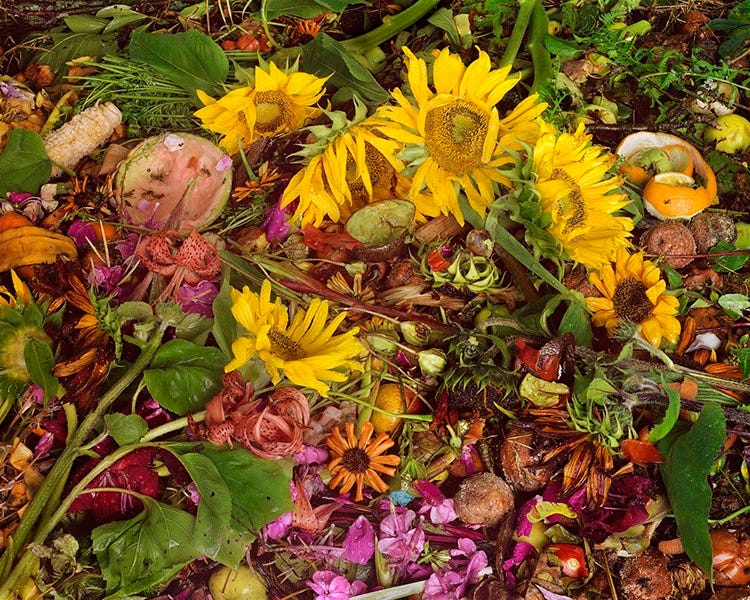
Let’s run it back to our noblest teacher: the mighty earth.
The word “compost” has its etymological roots in compote (literally a preserve, a mixture of the fruits of life), and in the past participle of the Vulgar Latin componere or “to put together”. Compost is mixture, fusion, and inclusion; it is the opposite of isolation.
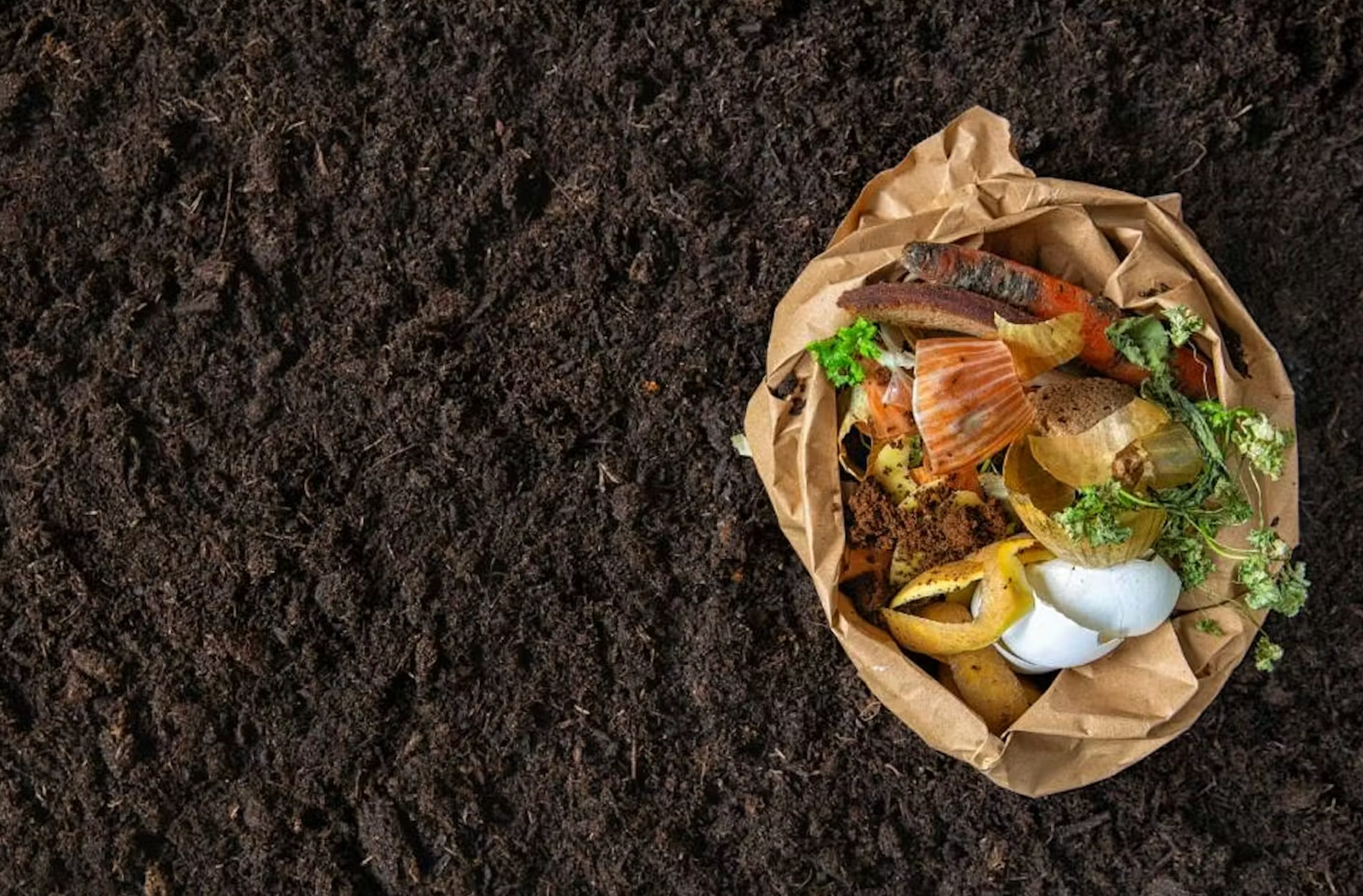
Compost is a natural process of decomposition that turns organic waste (food scraps, leaves, plant trimmings) into nutrient-dense soil. It requires greens, water, and air. It requires bacteria, fungi, and molds. It requires worms and insects and other elements that might not look pretty or clean at first glance. What results from the composting process is a rich, dark, nutrient-dense soil. The reigning diva Bette Midler herself declared: “my whole life had been spent waiting for an epiphany, a manifestation of God’s presence, the kind of transcendent, magical experience that lets you see your place in the big picture. And that is what I had with my first [compost] heap”.
Compost suggests that everything natural undergoes change and decay before ultimately emerging as nourishment. In terms of compost, a “closed system” is one in which every aspect and stage of the system is connected, not banished. Compost demonstrates the potential for new life sprouting from death, decay, and decomposition. Nothing is in vain. Nothing is wasted.
The earth began her ancient ballad long before we came into existence. If we kneel close to the soil, we might hear her creed: as she sings of oxygen, and time, and fertilization, and the transformation of all living things.
I recently attended a fundraising gala for the organization All Kings, which supports and empowers men impacted by the justice system by helping them “build lives of connection and meaning”. At the gala, several men demonstrated the courageous emotional and interpersonal work that All Kings members do to envision themselves and their world differently. I tasted roots, and soil, and the tattered embrace of sunlight. I jotted down the following note:
Perfection is fiction.
Grace is everything.
Bless our fellow earthlings in all of their phases of decomposition and transformation. Bless the greens and browns, the nitrogen and the carbon, the fungi and the beetles and the worms. Bless the bacteria. Bless the good dark. Bless the slow work of real change. Bless the endless compost of existence in which we grow, and turn, and grow, and turn…
ABOUT THE SUBSTACK:
If you enjoy my writing, go wild and click the ❤️ or 🔄 button on this post so more people can discover it on Substack.
Read my pieces on the importance of the more-than-human world here, here, here, here, here, here, and here.
Read my pieces on alternative ways of imagining here, here, here, and here.
ABOUT THE AUTHOR:
I am a creative director, experience designer, writer, and speaker.
I design extraordinary experiences, including brand launches, theatrical productions, weddings, and proposals. With each project, I harness narrative as a force of nature to draw humans deeper into the living world.
To learn more and start a collaboration, click HERE.